
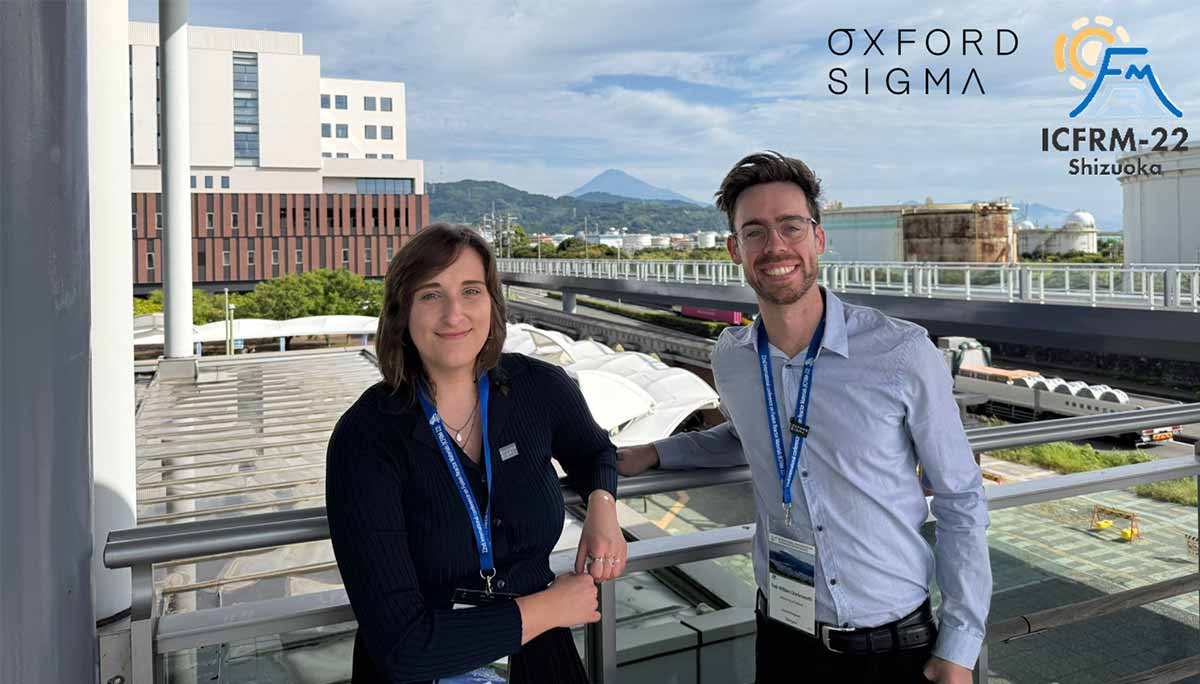
Oxford Sigma proudly participated in the 22nd International Conference on Fusion Reactor Materials (ICFRM-22), held in Shizuoka, Japan, from 29 September to 3 October 2025. As one of the leading international forums for fusion materials science, ICFRM-22 brought together researchers, engineers, and policymakers from around the world to share breakthroughs, align strategies, and accelerate the development of materials for fusion energy systems.
As a recognised leader in fusion materials technology and engineering, Oxford Sigma made a strong impact at this year’s conference. Our presence at ICFRM-22 focused on advancing the materials ecosystem required for commercial fusion energy, where our team presented pioneering research in the substantiation and irradiation benchmarking of breeder blanket materials, and engaged in key discussions on the state-of-play for fusion-specific codes and standards to support regulatory readiness, as well as the inclusion of advanced manufacturing techniques for fusion-grade materials. These initiatives reflect Oxford Sigma’s mission to deliver the materials technology and engineering frameworks essential for safe, efficient, and scalable fusion power plants, shaping the future of fusion reactor design and deployment.
Dr Emily Rose Lewis, Nuclear Materials Engineer at Oxford Sigma, presented a poster titled Advancements in Nuclear Fusion Codes, which detailed the company’s latest work on fusion-specific pressure codes and standards. The poster outlined the development of codification frameworks tailored to fusion environments, including updates to the American Society of Mechanical Engineers Boiler Pressure Vessel Code (ASME BPVC) Section III Division 4 “Fusion Energy Devices”. This work supports the qualification of structural materials and components under extreme irradiation and thermal conditions, ensuring safety and reliability in future fusion reactors.
“It was a privilege to present our progress on fusion codification at ICFRM-22. Division 4 of the ASME BPVC is being developed to evolve beyond considerations of safety assurance—but to also support performance and investment protection for complex fusion-specific reactor components, reflecting the needs of private fusion companies. These standards are vital for enabling regulatory confidence and supporting the deployment of fusion technologies at scale.”
Dr Emily Rose Lewis, Nuclear Materials Engineer
Dr Pedr Charlesworth, Materials Scientist at Oxford Sigma, delivered an oral presentation sharing updates from the UK Atomic Energy Authority (UKAEA) Lithium Breeding Tritium Innovation (LIBRTI) Programme, focusing on the VICE (Validation of Innovative Ceramic Engineering) project. His talk covered recent progress in qualifying lithium ceramic breeders for tritium breeding systems, including irradiation testing, thermal performance characterisation, and manufacturability assessments. These efforts are critical for enabling reliable tritium production in fusion blanket systems.
“ICFRM was a thoroughly enjoyable and productive conference that showcased both the forward steps the fusion field has taken over the past two years, and the pathways to projects these new technologies will be embedded into. Shizuoka served as a stunning host to talks with a fantastic conference hall, fresh sushi and stunning view of Mt Fuji from the front door. I was particularly interested in the developments in breeder blanket design which were presented at the conference and exciting new methods for joining dissimilar materials, which look to provide a scalable solution to one of fusions challenges.”
Dr Pedr Charlesworth, Materials Scientist
A key theme emerging from ICFRM-22 was the growing international focus on the qualification of fusion-grade materials. Discussions highlighted the importance of irradiation benchmarking, weld integrity, helium embrittlement, and tritium retention—areas where Oxford Sigma is actively contributing through both experimental research and codification efforts. The conference also showcased increasing interest in advanced materials such as SiC/SiC composites, oxide dispersion strengthened steels, and novel tungsten alloys, alongside the development of small specimen testing techniques and data-driven materials modelling.
Oxford Sigma is working closely with the ASME BPVC Section III Division 4 Fusion Energy Devices Working Group to write design rules and specifications for materials of interest specifically for fusion applications. This collaboration ensures that emerging fusion materials are supported by robust, internationally recognised standards that enable safe and scalable deployment.
Oxford Sigma is committed to advancing the materials technology and engineering standards necessary for the realisation of commercial fusion energy. We thank the ICFRM organisers and the global fusion community for a productive and inspiring conference, and we look forward to continued collaboration in the development of fusion reactor materials.
About Oxford Sigma
Oxford Sigma is a Fusion Technology company with a vision to tackle energy security and climate change by accelerating the commercialisation of fusion energy. Our mission is to deliver materials technology, materials solutions, and fusion design services. Oxford Sigma aims to produce advanced materials technologies, agnostic to fusion approach, for the materials ecosystem. Our fusion core materials are engineered to enable longer term operations for fusion pilot plants, with the aim of roll out to the first-of-a-kind commercial power stations. Oxford Sigma is internationally recognised as a key fusion materials and technological leader.
Get in touch at [email protected]