
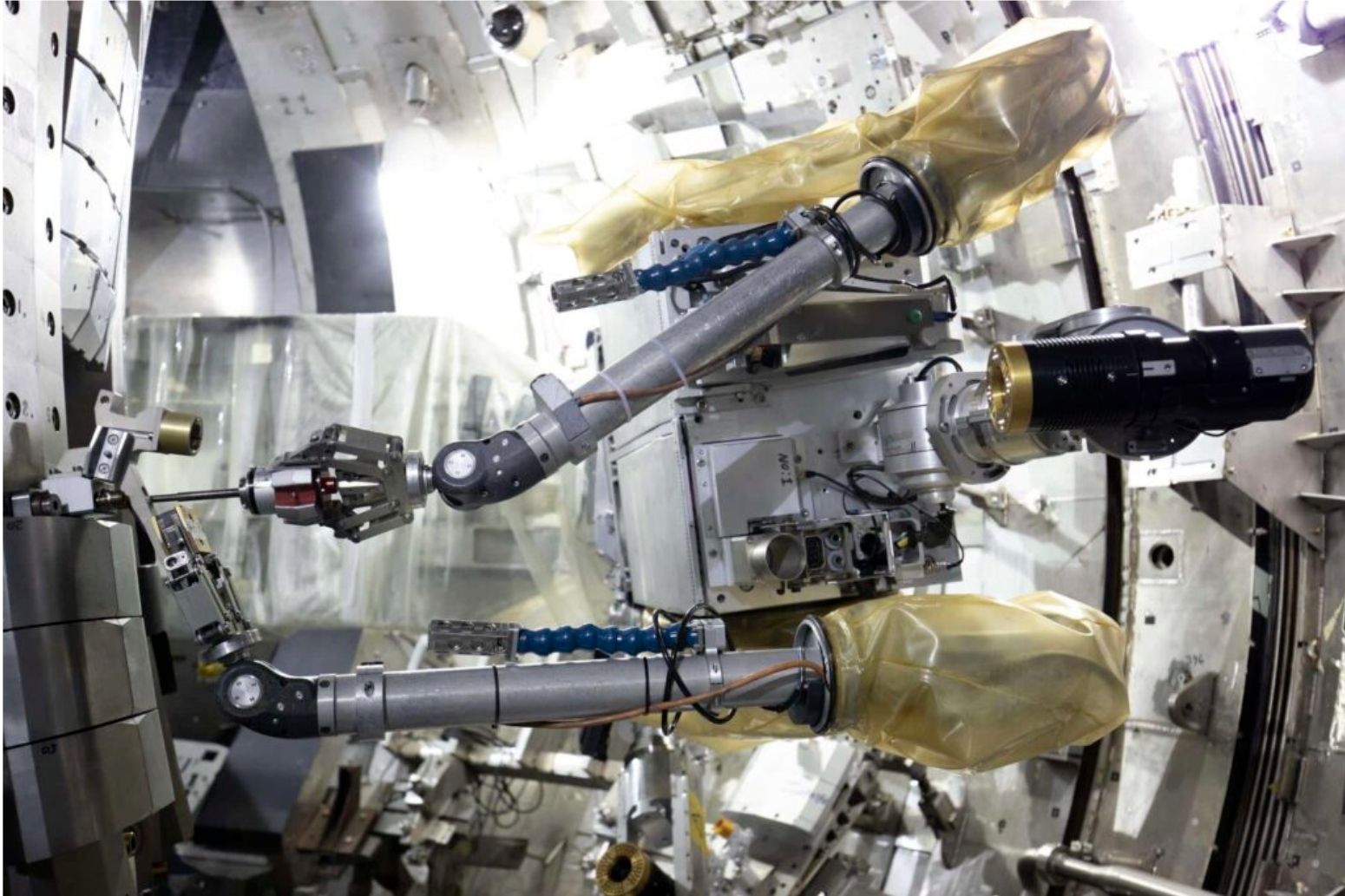
Oxford Sigma, in partnership with the UK Atomic Energy Authority (UKAEA) through the Fusion Futures Industry Capability (FFIC) programme, has set out the component qualification strategy for robotics in fusion energy and led a UK supply‑chain engagement initiative for the Fusion Oriented Robotic Technologies (FORT) programme. This work supports the UK’s growing fusion‑enabling industry by helping suppliers understand and prepare for future qualification expectations in fusion‑relevant robotic and remote‑handling systems required for operation and decommissioning of fusion energy devices.
Working with our partners at Ice Nine, Oxford Sigma delivered a structured outreach programme engaging with key FORT-relevant organisations across multiple tiers of the UK supply chain. These discussions provided insight into current capabilities, testing approaches, and readiness for qualification activities, ensuring the FORT pathway reflects practical UK needs.
With no dedicated standard currently available for qualifying robotics for fusion‑like radiation environments, the FORT initiative draws on best‑practice approaches from high‑integrity sectors such as aerospace, defence, and nuclear fission, while recognising fusion’s unique operational demands.
This work builds on Oxford Sigma’s strong background in qualification methodologies, strengthened by Oxford Sigma’s CEO, Professor Thomas Davis’ leadership in materials qualification and his ongoing contributions to quality standards, design codes, and international standards development through the American Society of Mechanical Engineers (ASME) Boiler & Pressure Vessel (BPV) Code for Fusion Energy Devices and ISO standards. This foundation also ensures that the FORT initiative directly supports the future development of fusion-specific Codes and Standards, helping establish a clearer qualification landscape for robotics technologies in fusion environments.
The developing FORT process spans four layers of technologies: components (including sensors and communications), joint‑level sub‑systems (actuators, automation), and complete robotic systems, and incorporates materials considerations where they influence performance, reliability or lifetime. It is being shaped around representative fusion‑like parameters, including environments targeting ≥ 1 MGy total ionising dose, and the need to address end‑of‑life waste pathways.
Through this initiative, Oxford Sigma aims to help UK companies benchmark capability, enhance radiation‑tolerant design and testing expertise, and position themselves for future fusion programmes. Recent outreach has engaged materials and cable suppliers, actuator and component manufacturers, sensing and control specialists, test laboratories, system integrators, engineering consultancies, and digital‑design providers. This ensures that the emerging FORT qualification pathway is industry‑informed, technology‑agnostic, and well aligned with UK supply‑chain strengths.
Garin Schoonhoven, Project FORT Qualification UKAEA Team Lead:
“This project work was made possible through the Fusion Futures Industry Capability (FFIC) funding, and RACE (UKAEA) is pleased to have contracted Oxford Sigma who have delivered significant progress in the critical area of qualification for fusion robotics technologies. This foundation will help support the development of UK fusion industry as well as provide a pathway for qualification of radiation technologies in parallel markets”
Dr Emily Rose Lewis, Project FORT Qualification Team Lead at Oxford Sigma Ltd, said:
“Qualification is one of the most critical enablers for fusion robotics, and FORT represents a major step in preparing the UK supply chain for the challenges and opportunities ahead. Establishing a high-level, transparent qualification pathway now means we can accelerate innovation, reduce development risk, and position UK industry to lead in the emerging global fusion sector.”
Dr Matthew Nancekievill, CEO at Ice Nine Robotic Solutions:
“It is clear to me that robotics will play a large role in the safe management and operation of future fusion facilities. Fusion represents a new frontier for robotic use-cases that will require different qualification approaches to those undertaken in environments such as nuclear fission, space and medicine and this project highlights that through collaborations within the supply chain, we can enable this future together.”
About Oxford Sigma
Oxford Sigma is a Fusion Technology company with a vision to tackle energy security and climate change by accelerating the commercialisation of fusion energy. Our mission is to deliver materials technology, materials solutions, and fusion design services. Oxford Sigma aims to produce advanced materials technologies, agnostic to fusion approach, for the materials ecosystem. Our fusion core materials are engineered to enable longer term operations for fusion pilot plants, with the aim of roll out to the first-of-a-kind commercial power stations. Oxford Sigma is internationally recognised as a key fusion materials and technological leader.
Get in touch at [email protected]
About Ice Nine Robotics Solutions
Ice Nine develops mobile robotic solutions for hazardous inspection and characterisation tasks. Our priority is to remove humans from harmful environments, with a focus on industries such as Nuclear Decommissioning. We can both design bespoke robotic solutions from the ground-up, or modify existing technology through to deployment on-site. Having deployed in many regulation rich environments, we are well versed in developing safety cases, with a large amount of irradiation campaign experience to determine fault conditions of robotic sub-systems and electronics when exposed to ionising radiation.
Get in touch at [email protected]
About the UKAEA
UKAEA is the national organisation responsible for the research and delivery of sustainable fusion energy. It is an executive non-departmental public body, sponsored by the Department for Energy Security and Net Zero.
UKAEA runs the fusion machine MAST-Upgrade (Mega Amp Spherical Tokamak) and is delivering the transition of JET from plasma operations to repurposing and decommissioning. The insights gained from this process will contribute to the advancement of sustainable future fusion power plants.
STEP (Spherical Tokamak for Energy Production) is a major technology and infrastructure programme that will demonstrate net energy from fusion, fuel self-sufficiency and a route to plant maintenance. UKAEA is STEP’s fusion partner and will work alongside STEP’s industry partners – one in engineering and one in construction – with the following short-list announced here.
The STEP programme is being delivered by UK Industrial Fusion Solutions Ltd (UKIFS) a wholly owned subsidiary of UKAEA Group. UKIFS will lead STEP’s integrated delivery team to design and build the prototype plant at West Burton site in Nottinghamshire, targeting first operations in 2040.
UKAEA is now engaging in Fusion Futures, a programme that aims to foster world-leading innovation whilst stimulating general industry capacity through international collaboration and the development of future fusion power plants.
UKAEA also undertakes cutting edge work with research organisations and the industrial supply chain in a wide spectrum of areas, including robotics and materials.
More information: https://www.gov.uk/ukaea. Social Media: @UKAEAofficial
About fusion energy
When a mix of two forms of hydrogen (deuterium and tritium) is heated to form a controlled plasma at extreme temperatures – 10 times hotter than the core of the Sun – they fuse together to create helium and release energy which can be harnessed to produce electricity. There is more than one way of achieving this. UKAEA’s approach is to hold this hot plasma using strong magnets in a ring-shaped machine called a ‘tokamak’, and then to harness this heat to produce electricity in a similar way to existing power stations.