

The successful commercialisation of fusion energy will require more than scientific breakthroughs and engineering innovation. It will depend on the development of a highly skilled workforce capable of designing, testing, manufacturing and operating the technologies that will underpin future fusion power plants.
At Oxford Sigma, we believe that developing this workforce begins long before graduates enter industry. Supporting future scientists and engineers at every stage of their educational journey is essential if the UK is to realise its ambitions as a global leader in fusion energy.
Over the past year, Oxford Sigma has actively supported talent development across multiple levels of education and career progression, from secondary school students exploring STEM careers through to university interns and early-career nuclear engineers.
Inspiring Future Engineers Through STEM Outreach
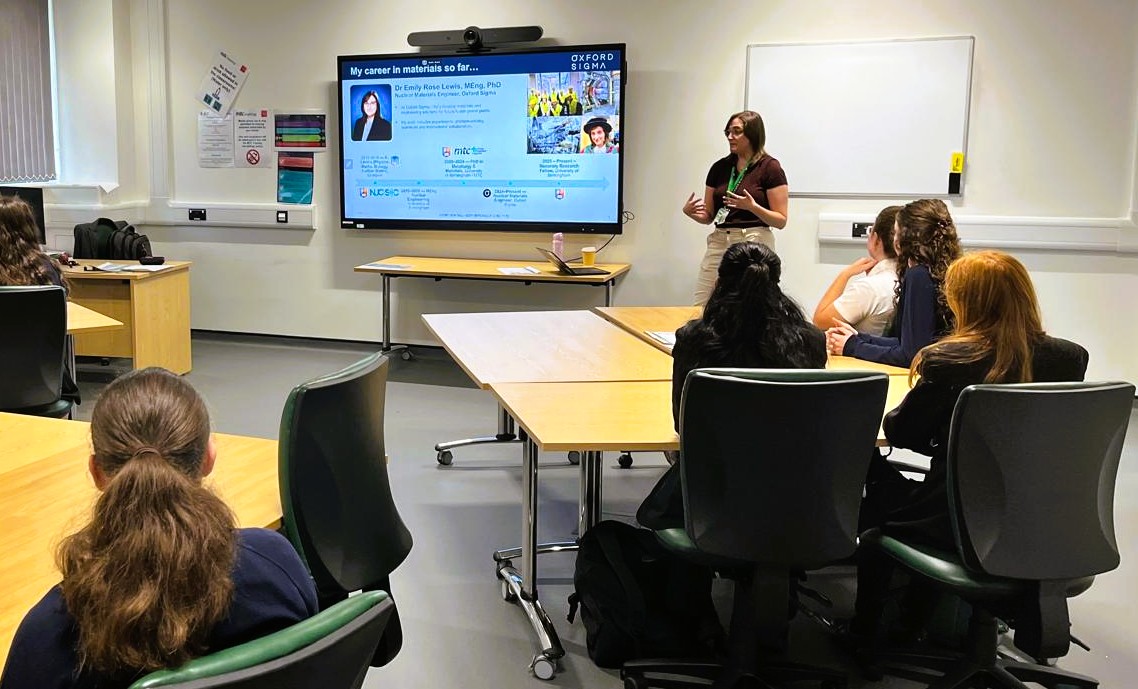
This year, Oxford Sigma supported the Year 10 and 11 Girls in STEM Workplace Experience Event at Oxfordshire Advanced Skills (OAS), hosted on the UK Atomic Energy Authority’s (UKAEA) Culham Campus. Around 60 pupils from local schools (Bartholomew School, Fitzharrys School, Wheatley Park School and Whitelands Academy) took part in interactive sessions designed to showcase engineering careers and advanced technologies.
Our fusion materials engineering workshop introduced students to fusion energy, materials science and real fusion reactor components. By encouraging pupils to think like engineers and make evidence-based decisions, the activity highlighted the exciting opportunities available across the fusion sector. The event also supported greater visibility of women in engineering and encouraged young people to consider future STEM careers.
“When I studied physics as a teenager, I was often the only girl in the classroom. Today, we can and should do better, visibility absolutely matters. Young people are more likely to pursue careers when they can see someone like themselves already doing the job. That’s why events like this are so important. By giving students direct exposure to engineers working in fusion today, we can help them see that these careers are achievable and that they have a place in shaping the technologies of the future.”
Dr Emily Rose Lewis, Nuclear Materials Engineer
Supporting Future Innovators Through Industrial Cadets
Oxford Sigma is proud to support the next generation of scientists and engineers through the Industrial Cadets Gold Project powered by EDT, a nationally recognised STEM programme connecting students with industry through real-world engineering challenges.
Over the past year, Oxford Sigma has mentored students from Francis Holland School as part of their Industrial Cadets Gold Project. Working alongside Oxford Sigma engineers, the team developed the Food in Fridge Inventory (FIFI) system, a Raspberry Pi and AI-based solution designed to help reduce food waste by tracking groceries, monitoring expiry dates and recommending recipes.
The students recently visited Oxford Sigma to present their final solution, demonstrating the creativity, teamwork and technical skills they had developed throughout the programme. Following the presentation, members of the Oxford Sigma team shared their own career journeys and discussed the many routes into science, engineering and fusion technology.
The Industrial Cadets Gold Project celebrates more than 40 years of helping young people gain practical STEM experience while developing the technical and employability skills valued by industry.
“It was an absolute pleasure to support the Industrial Cadets programme in Oxford Sigma’s first year working with the Engineering Development Trust. The students made fantastic progress over the course of the year, and it was amazing to see their development and the excellent work they produced. I also very much enjoyed the opportunity to judge the regional submissions, and I was really impressed by the standard of the work throughout the projects, which helped to highlight the value of the Industrial Cadets programme.”
Luke Mulholland, Graduate Project Manager
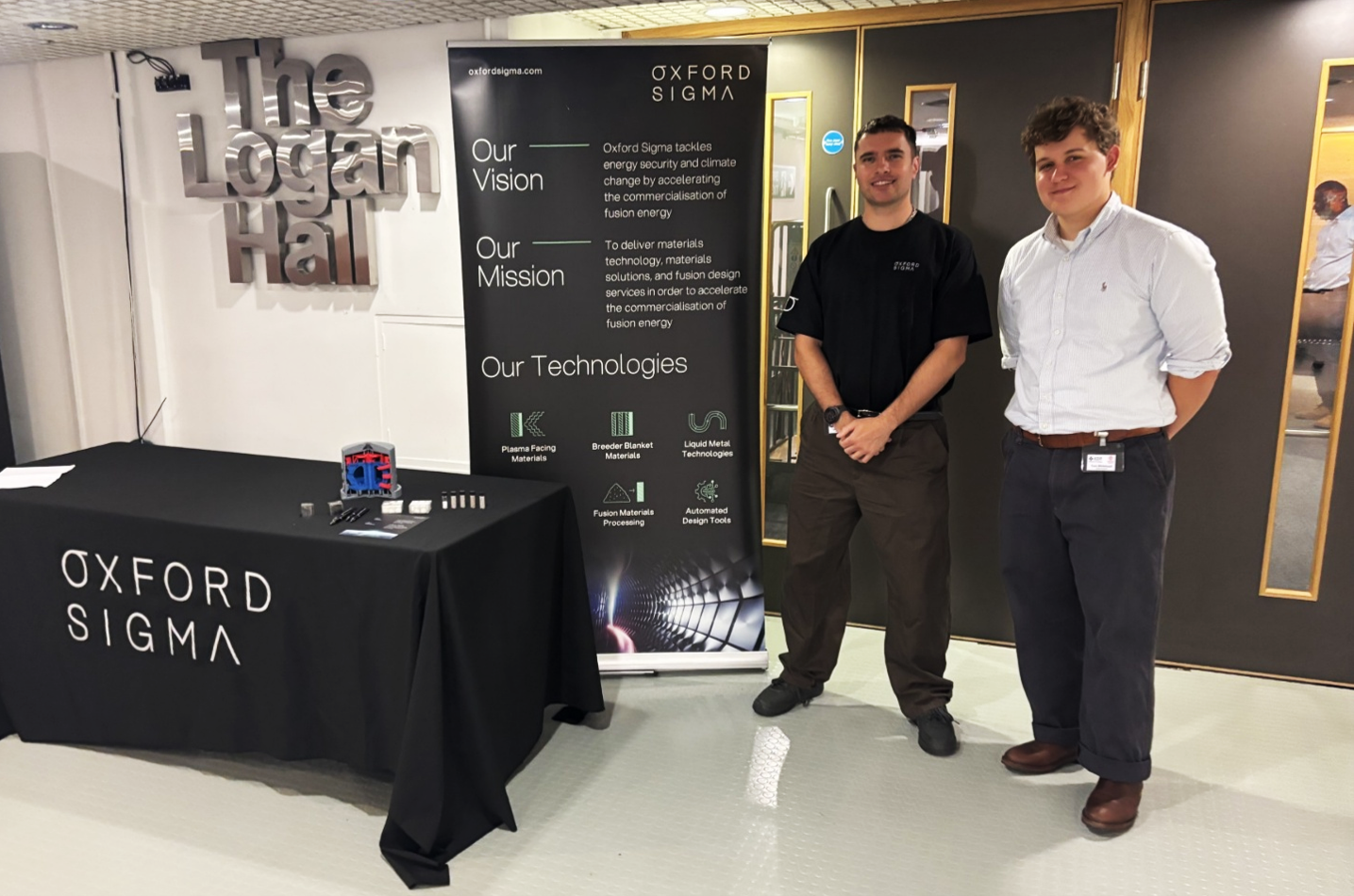
Investing in University Talent Through the UKAEA FOSTER Programme
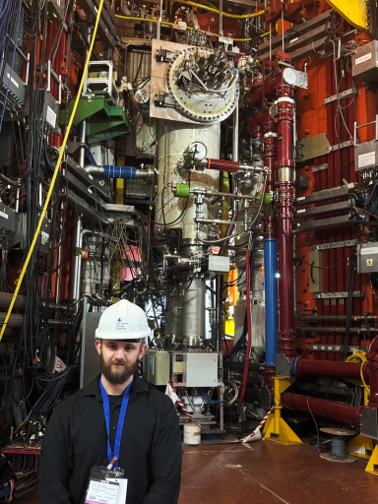
Oxford Sigma was delighted to welcome four interns through the UK Atomic Energy Authority’s Fusion Opportunities in Skills, Training, Education and Research (FOSTER) programme. The programme provides students with the opportunity to gain hands-on experience within organisations contributing to the future of fusion energy while helping develop the skills needed for the future fusion workforce.
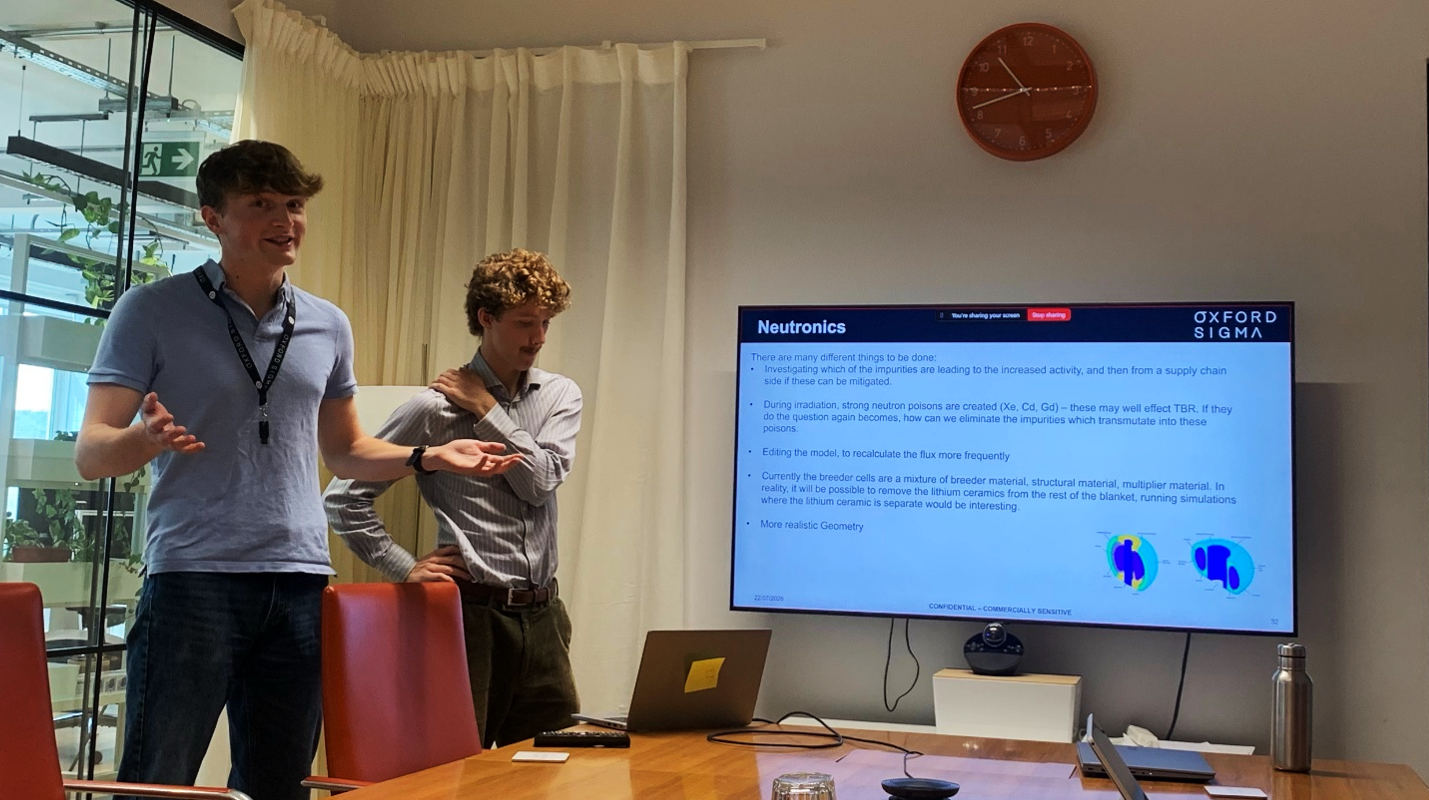
During their placements, our interns worked alongside Oxford Sigma scientists and engineers on projects spanning materials science, neutronics, manufacturing process development and hydrogen systems engineering. Their work addressed real challenges facing the fusion sector, including lithium breeder material supply chains, neutronics modelling of impurity effects, lithium ceramic pebble manufacturing and the specification of specialist hydrogen research systems.
The internships provided valuable experience in applied research, technical problem solving, experimentation and engineering analysis within a commercial fusion environment. Beyond their technical work, the interns also had the opportunity to develop their professional communication skills. At the conclusion of their placements, each student prepared and presented an academic-style poster showcasing their project objectives, methodology, findings and recommendations. The poster session provided valuable experience communicating complex scientific and engineering concepts to technical audiences, an increasingly important skill for future researchers and engineers.
Oxford Sigma has a long-standing commitment to student development through UKAEA programmes and previously hosted undergraduate students through the Fusion Industry Programme Summer Placement Scheme, helping students gain valuable industrial experience while contributing to real fusion technology development.
“Having the opportunity to manage an intern and supporting their development as a graduate has been incredibly rewarding. It has shown me how far I have come since joining as a graduate. While it’s easy to focus on how much there is still to learn, mentoring someone else has made me recognise the knowledge and experience I have gained since joining Oxford Sigma.”
Kate Raistrick, Graduate Engineer, Oxford Sigma
“Researching hydrogen materials for fusion at Oxford Sigma was a fantastic opportunity. Joining a team so genuinely passionate, and driven to make a real impact across sectors made my eight weeks immensely rewarding. Advanced materials are in safe hands with Oxford Sigma.”
Joseph Coupe, Mechanical Engineering Student, University of Sheffield
Supporting Higher Education and Fusion Training
Oxford Sigma actively contributes to higher education and professional training across the fusion sector. Members of our team support undergraduate, postgraduate and professional development programmes, helping develop the future fusion workforce.
- Dr Thomas P. Davis contributes to postgraduate fusion education through the Fusion CDT, Fusion CDT Industry School and wider fusion skills initiatives, while also delivering international training on fusion codes and standards.
- Dr Bradley Young, Materials Lead at Oxford Sigma, is a College Lecturer in Materials Science at St Anne’s College, University of Oxford, teaching undergraduate materials science and engineering.(Source provided by user.)
- Dr Emily Rose Lewis, Nuclear Materials Engineer at Oxford Sigma, is an Honorary Research Fellow at the University of Birmingham School of Metallurgy and Materials, delivering lectures on fusion engineering and codes and standards to metallurgy and materials students studying nuclear technologies.
Through teaching, mentoring and industry engagement, Oxford Sigma helps strengthen the connection between academia and industry while supporting the development of future fusion engineers.
Supporting Early-Career Nuclear Engineers
Developing the future fusion workforce does not end at graduation. Supporting early-career engineers as they transition into industry is equally important if the UK is to retain the specialist skills needed to deliver future fusion and advanced nuclear programmes.
Oxford Sigma is proud to support participants on the Nuclear Graduates Programme, one of the UK’s flagship graduate development schemes for the nuclear sector. The programme brings together graduates from across the industry and provides structured training, professional development, leadership opportunities and placements with leading organisations throughout the nuclear supply chain.
The scheme is designed to develop the next generation of technical and industry leaders by combining hands-on industrial experience with professional skills development. Graduates gain exposure to different organisations, projects and disciplines, helping them build a broad understanding of the challenges and opportunities facing the nuclear and fusion sectors.
As part of this commitment, Oxford Sigma recently welcomed three Nuclear Graduates to the business. Working alongside our scientists and engineers, they will gain experience in fusion technology development, advanced materials engineering and the commercial challenges associated with bringing new technologies to market.
“Joining Oxford Sigma has given me the opportunity to apply my technical knowledge to real engineering challenges while developing new skills in a supportive and collaborative environment. Working on technologies that could help shape the future of fusion energy is incredibly rewarding, and the mentorship I’ve received from the team has already had a significant impact on my professional development.”
Humayun Ahmed, Mechanical Engineer and Nuclear Graduate
By supporting graduates early in their careers, Oxford Sigma is helping develop the multidisciplinary expertise needed for future fusion power plants while contributing to a stronger, more resilient UK nuclear workforce.
Building the Skills Base Needed for Fusion Commercialisation
Fusion commercialisation will require expertise spanning materials science, manufacturing engineering, tritium technology, neutronics, systems engineering, robotics, digital engineering and many other specialist disciplines.
Developing the workforce capable of delivering these technologies requires sustained engagement across the entire educational pathway. From introducing school students to engineering careers, through Industrial Cadets and university internship programmes, to supporting graduate engineers entering industry, Oxford Sigma is committed to helping build the skills pipeline needed to enable fusion commercialisation.
Technical expertise alone is not enough. Future engineers must also be able to communicate complex ideas, collaborate across disciplines and translate research into deployable engineering solutions. By investing in people at every stage of their development, Oxford Sigma is helping strengthen the future fusion workforce that will be needed to support the UK’s ambitions in fusion energy.
About Oxford Sigma
Oxford Sigma is a Fusion Technology company with a vision to tackle energy security and climate change by accelerating the commercialisation of fusion energy. Our mission is to deliver materials technology, materials solutions, and fusion design services. Oxford Sigma aims to produce advanced materials technologies, agnostic to fusion approach, for the materials ecosystem. Our fusion core materials are engineered to enable longer term operations for fusion pilot plants, with the aim of roll out to the first-of-a-kind commercial power stations. Oxford Sigma is internationally recognised as a key fusion materials and technological leader.
Get in touch at [email protected]
About UKAEA
Who we are
The United Kingdom Atomic Energy Authority (UKAEA) is the UK’s national fusion energy research organisation. We are an executive non-departmental public body of the Department for Energy Security and Net Zero (DESNZ).
The work we do
UKAEA’s mission is to lead the delivery of sustainable fusion energy and maximise the scientific and economic benefit. We do this by being technical experts, partnering with companies and the international research community.
At the core of UKAEA’s efforts is the operation of world-leading facilities that build a comprehensive knowledge base for fusion energy. By addressing and solving the challenges across the full lifecycle of fusion, and integrating solutions from various disciplines, we establish technical centres of excellence that serve as the foundation for future fusion power plant programmes.
UKAEA collaborates with its partners to develop fusion power plants by providing access to our skills, facilities and expertise. UKAEA owns UK Fusion Energy (UKFE) on behalf of the UK government. Through UKFE, we’re spearheading the Spherical Tokamak for Energy Production (STEP) programme to design and build the UK’s first prototype fusion energy power plant in Nottinghamshire.
To grow the fusion ecosystem, UKAEA focuses on cultivating skilled talent, growing the fusion industry and creating ‘innovation clusters’. We actively seek opportunities to advance fusion technologies and communicate its vast potential to stakeholders and the public alike to accelerate fusion energy’s future – the energy of tomorrow we need today.
More information: https://www.gov.uk/ukaea. Social Media: @UKAEAofficial
About fusion energy
When a mix of two forms of hydrogen (deuterium and tritium) is heated to form a controlled plasma at extreme temperatures – 10 times hotter than the core of the Sun – they fuse together to create helium and release energy which can be harnessed to produce electricity. There is more than one way of achieving this. UKAEA’s approach is to hold this hot plasma using strong magnets in a ring-shaped machine called a ‘tokamak’, and then to harness this heat to produce electricity in a similar way to existing power stations.